
Black Wall Street: The Proof and the Warning
Greenwood is cited constantly and studied rarely. Both halves of the lesson matter.
The Black American Party advances the producer class of the Black American community — through ownership, enterprise, constitutional principle, and economic solidarity. What is good for Black Americans is good for all Americans.
Not a transfer. A functioning position in the economy that already exists.
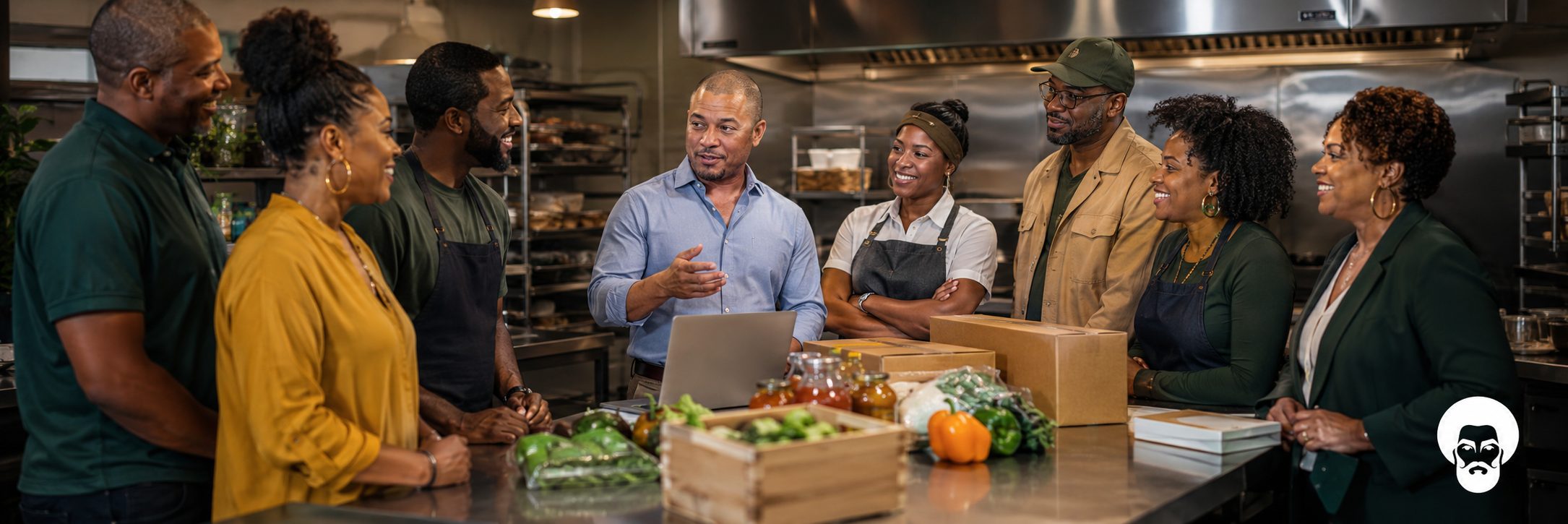

Every argument about Black America and the economy eventually reduces to one question: is the objective to receive more, or to own more? The answer determines everything that follows, and the two objectives are not complementary. Time and political capital spent on one is not available for the other.
The Black American Party answers ownership. Not because receiving is shameful, but because receiving is revocable. Anything granted by a legislature can be withdrawn by the next one, and has been.
We reject the socialist dependency state, and we reject it on practical grounds rather than ideological ones. A community whose income arrives as a transfer has its political interests permanently tied to the party that administers the transfer. That is not a coalition; it is a leash. It explains why Black American votes have been reliably delivered and reliably ignored for two generations.
The producer earns from a customer. The customer can be anyone. That is what makes the producer politically free.
Black American consumer spending is enormous and almost entirely unleveraged, because it is uncoordinated. Spending that flows out of the community on first contact generates no local payroll, no local rent, no local capital formation. The same money routed through Black American producers turns over several times before it leaves, and each turn is somebody's wage.
This is the whole argument for economic solidarity, and it is an argument about arithmetic rather than about race loyalty. Velocity compounds. Nothing else in reach compounds as fast.
A dense layer of firms rather than a handful of celebrated ones. Employers rather than only self-employed. Suppliers selling to other Black American firms, not only to consumers. Banks and credit unions holding community deposits and lending them back into the community. Property owned rather than rented. Businesses that survive their founder.
None of that requires a new law. All of it requires coordination, and coordination is what a party is for.
No. The party rejects the socialist dependency state and prioritises ownership, enterprise and self-reliance.
The party's argument is that assistance is revocable and ownership is not, so political capital should be spent on the second. Specific programme positions are set out in the relevant chapters.
Because a dollar that changes hands several times inside the community pays several people, while a dollar that leaves on first contact pays one. Velocity compounds faster than any transfer available.
Greenwood is cited constantly and studied rarely. Both halves of the lesson matter.
Property is the foundation of generational wealth, and Black American families have been losing it for a century.
Inflation is a tax on the producer and a thief of savings, and it falls hardest on the people with the least cushion.
Some businesses locate in our communities precisely because the alternatives are thin.
Every road, bridge and broadband build is a procurement decision before it is a construction project.
The party supports the creation of a Black American cryptocurrency - to establish wealth, and to keep the dollar circulating inside our own economy.
$10 a month for the private members network, business referral and local organizing.
Become a member →Twelve chapters and 200+ cited lessons. One-time $40, one year of access.
Enroll now →